If your Minnesota lawn is thin, compacted or simply doesn’t look as healthy as it once did, adding more fertilizer isn’t always the answer.
Sometimes the lawn needs help below the surface and more healthy grass above it.
That’s where aeration and overseeding in Minnesota can make a significant difference. Core aeration helps relieve soil compaction and improves conditions around the root zone, while overseeding introduces new grass into thin areas of the existing lawn.
When performed together at the right time of year, they can be one of the most effective ways to improve the density, appearance and overall health of an established Minnesota lawn.
What Is Core Aeration?
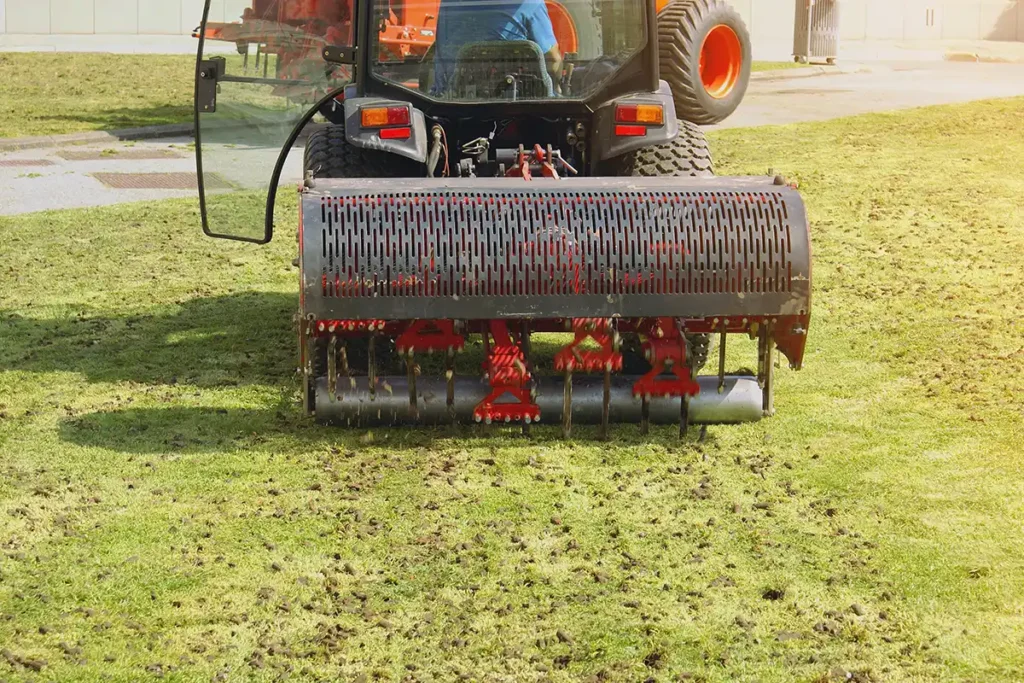
Core aeration is a process that mechanically removes small plugs, or cores, of soil and turf from the lawn.
Unlike equipment that simply punches holes into the ground, a core aerator actually removes material. Those openings help reduce soil compaction and allow air, water and nutrients to move more easily into the root zone.
The soil plugs are left on the lawn, where they gradually break apart and return organic material to the soil.
It may look a little strange for a few days, but those little plugs scattered across the lawn are exactly what you want to see after a proper core aeration.
Why Does Soil Become Compacted?
Soil contains tiny spaces that allow air and water to move through it. When soil becomes heavily compacted, those spaces are reduced.
Compaction can be caused by normal activity around the home, including:
- Regular foot traffic
- Children playing on the lawn
- Pets
- Lawn equipment
- Vehicles or trailers crossing the lawn
- Construction activity
- Naturally heavy soil conditions
The more heavily an area is used, the greater the potential for compaction.
Grass growing in compacted soil may have difficulty developing a strong root system, even when you’re watering and fertilizing properly.
How Can I Tell If My Lawn Needs Aeration?
You can’t always identify compacted soil simply by looking at the grass, but there are some clues.
A lawn may benefit from aeration if heavily traveled areas are becoming thin, water tends to run off instead of soaking into the ground, the soil feels extremely hard or the grass seems to struggle despite otherwise appropriate lawn care.
Lawns around newer homes can also experience compaction caused by construction equipment and grading during the building process.
If you’re unsure, a lawn care professional can evaluate the turf and soil conditions and determine whether aeration makes sense.
What Is Overseeding?
Overseeding is exactly what it sounds like: planting new grass seed into an existing lawn.
You’re not removing all the existing turf and starting over. Instead, new grass is introduced among the grass that’s already growing.
This can help increase turf density, fill thin areas and introduce vigorous new plants into an established lawn.
For lawns that are generally healthy but have become thin or patchy, overseeding can provide substantial improvement without the expense and disruption of completely replacing the lawn.
Why Do Aeration and Overseeding Work So Well Together?
Grass seed needs contact with soil to germinate successfully.
Simply broadcasting seed across a thick lawn can leave a significant amount sitting on grass blades, thatch or other material instead of reaching the soil.
Core aeration creates thousands of openings throughout the lawn and exposes additional soil at the surface.
That creates better opportunities for seed-to-soil contact while simultaneously improving conditions for the existing grass.
That’s why aeration and overseeding in Minnesota are frequently performed together.
When Is the Best Time to Aerate and Overseed in Minnesota?
Late summer into early fall is generally an excellent window for aerating and overseeding Minnesota lawns.
Most lawns in our area contain cool-season grasses that perform particularly well as the intense heat of summer begins to fade.
At this time of year, soil temperatures remain warm enough to encourage germination while cooler air temperatures create favorable growing conditions for young grass.
There is also typically less competition from many annual weeds than there is during spring.
Most importantly, new grass still has some growing season available to establish itself before winter dormancy.
Can I Aerate in the Spring?
Spring aeration can be appropriate in some situations, particularly when compaction is severe.
However, when overseeding is part of the plan, fall often offers advantages for Minnesota cool-season turf.
Spring seedlings have relatively little time to establish before summer heat and drought arrive. Spring is also an important time for controlling annual weeds such as crabgrass, and some weed-prevention strategies can conflict with establishing new grass seed.
The right timing depends on the condition of the lawn and what you’re trying to accomplish.
Can You Wait Too Long to Overseed?
Absolutely.
Cooler fall weather may be great for established grass, but Minnesota’s growing season doesn’t last forever.
New grass needs time to germinate and begin developing before winter arrives. Seeding too late can result in poor establishment simply because the seedlings run out of growing season.
This is why it’s better to plan aeration and overseeding before the leaves are falling and everyone is thinking about putting the mower away for winter.
How Often Should a Lawn Be Aerated?
There isn’t one schedule that’s right for every property.
Lawns with significant compaction or heavy traffic may benefit from more frequent aeration, while lawns growing in loose, healthy soil may not need it as often.
The goal isn’t to aerate simply because another year has passed. The goal is to improve soil conditions when compaction is interfering with healthy turf growth.
Evaluating the lawn each season helps determine whether aeration should be part of that year’s lawn care program.
Does Aeration Help With Thatch?
Core aeration can also help with moderate thatch buildup.
Thatch is the layer of partially decomposed organic material located between the green grass and the soil surface. A small amount is normal, but excessive thatch can interfere with water and nutrients reaching the soil.
The soil brought to the surface during core aeration contains microorganisms that help break down organic material. Aeration also improves contact between the soil and the thatch layer.
However, severe thatch problems may require additional treatment. Aeration shouldn’t automatically be considered a substitute for every type of thatch management.
What Happens to the Soil Plugs After Aeration?
Leave them alone.
Homeowners sometimes see hundreds of soil plugs scattered across their freshly aerated lawn and assume somebody forgot to clean up.
Those plugs are supposed to be there.
Weather, watering and normal mowing will gradually break them apart and return the soil to the lawn.
There’s no need to rake them up.
How Important Is Watering After Overseeding?
Extremely important.
Grass seed needs consistent moisture during germination. If the surface repeatedly dries out during this period, germination can suffer.
Newly overseeded lawns generally require lighter, more frequent watering initially to keep the seedbed appropriately moist. As the grass germinates and develops roots, watering practices can gradually transition toward deeper and less frequent irrigation.
The exact schedule depends on weather, soil conditions and the type of grass being established.
Even professionally applied seed can’t grow without adequate moisture.
When Can I Mow After Overseeding?
Don’t stop mowing the existing lawn simply because it has been overseeded.
However, new seedlings need to be treated carefully while they’re establishing.
Allow the new grass to develop enough height before subjecting it to normal mowing, and make sure your mower blade is sharp. A dull blade can tear young grass instead of cutting it cleanly.
Avoid aggressive mowing or removing too much grass at once.
Can I Fertilize After Aeration and Overseeding?
Fertilization is often part of a complete lawn renovation or overseeding program because establishing grass needs adequate nutrients.
The important part is using an appropriate fertilizer at the appropriate time.
Applying more fertilizer than the lawn needs doesn’t make grass establish twice as fast and can create additional problems.
A professional program coordinates fertilization with aeration, overseeding and the existing condition of the lawn.
What About Weed Control and New Grass Seed?
This requires some planning.
Certain products used to prevent or control weeds can also interfere with grass seed germination or damage young seedlings.
That’s why weed control and overseeding shouldn’t be treated as completely unrelated lawn services.
If both are needed, the timing and products should be coordinated so you’re not spending money planting grass and then applying something that prevents it from growing.
Will Overseeding Fix Every Thin Lawn?
No.
If the underlying conditions won’t support healthy grass, adding more seed may only provide temporary results.
For example, a lawn may remain thin because of:
- Heavy shade
- Poor drainage
- Severely compacted soil
- Improper watering
- Insect or disease problems
- Heavy traffic
- Poor soil conditions
Those issues should be identified and addressed as part of the renovation process.
The objective isn’t simply to get grass seed to germinate. It’s to create conditions where that new grass can survive and become established turf.
How Long Until an Overseeded Lawn Looks Better?
Aeration and overseeding aren’t instant cosmetic treatments.
Grass has to germinate, develop roots and mature. Different grass varieties also germinate and establish at different rates.
You may begin seeing new growth relatively quickly under favorable conditions, but developing a noticeably thicker lawn takes time.
The biggest improvement may become apparent the following spring after the new turf has had an additional growing period.
Should You Aerate Without Overseeding?
Yes. Aeration can provide benefits even when no new seed is being planted.
If a lawn already has good turf density but suffers from soil compaction, core aeration can improve conditions around the existing root system without necessarily adding more grass.
Likewise, not every lawn that needs overseeding has exactly the same compaction issues.
The two services complement each other extremely well, but they should still be recommended based on what the individual lawn needs.
Aeration and Overseeding Can Help Build a Thicker Minnesota Lawn
A thick lawn isn’t just more attractive. Dense turf is also better able to compete with weeds for space, sunlight, water and nutrients.
That’s one reason aeration and overseeding in Minnesota can be such valuable tools for lawns that have become thin after years of use or a difficult summer.
Aeration improves the environment where grass roots grow. Overseeding increases the number of healthy grass plants occupying the lawn.
Together, they address the lawn from both directions.
Professional Aeration and Overseeding in the Brainerd Lakes Area
If your lawn in Brainerd, Baxter or the surrounding Lakes Area has become thin, compacted or patchy, TurfCare can help determine whether aeration and overseeding are right for your property.
We’ll evaluate the existing turf and recommend a lawn care program based on its actual condition, including core aeration, overseeding, fertilization and weed control when appropriate.
Contact TurfCare today and let’s give your lawn the conditions it needs to grow thicker, stronger and healthier.