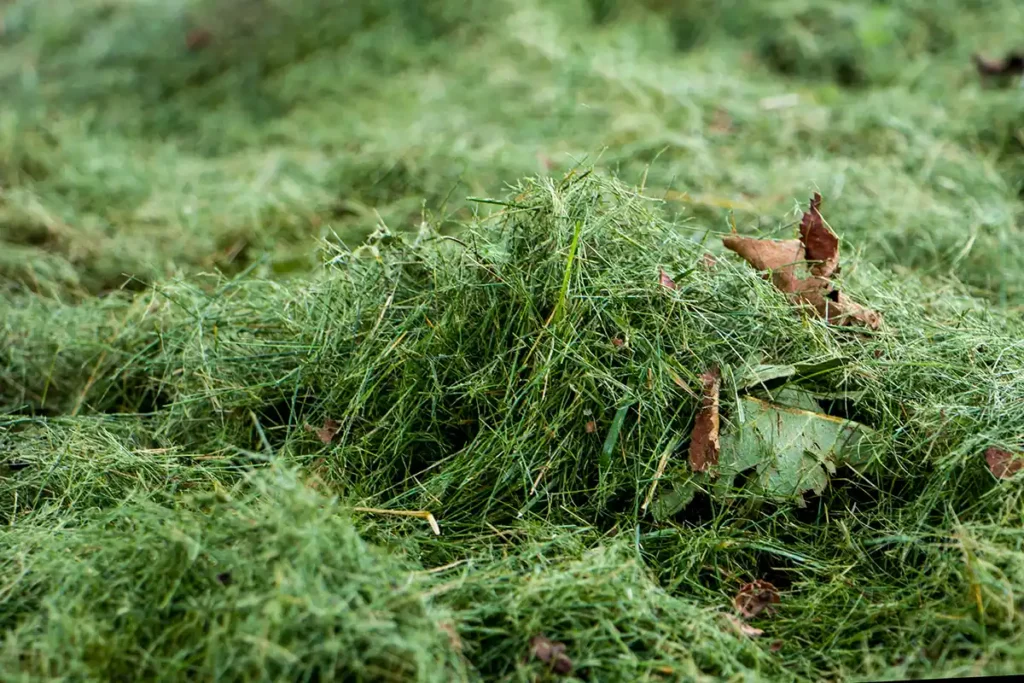
Every time you mow the lawn, you have a choice: collect the grass clippings and haul them away, or leave them right where they fall.
For most Minnesota lawns, the answer is surprisingly simple.
In most cases, you should leave grass clippings on the lawn.
When you’re mowing regularly and removing only a reasonable amount of grass, the clippings break down quickly and return valuable nutrients to the soil. They don’t normally create thatch, and there’s usually no benefit to spending extra time bagging them.
There are, however, situations when collecting grass clippings makes sense. Here’s how to know which approach is right for your lawn.
Why Leave Grass Clippings on the Lawn?
Grass clippings aren’t waste. They’re mostly water along with nutrients that the grass absorbed from the soil while it was growing.
When finely cut clippings are left on the lawn, they settle between the grass blades and begin decomposing. As they break down, nutrients are returned to the soil where they can be used again by the growing turf.
It’s essentially a small recycling system happening every time you mow.
Leaving clippings also saves time. There’s no stopping to empty the mower bag, no piles of grass to deal with afterward and nothing to haul away.
Do Grass Clippings Cause Thatch?
This is probably the biggest misconception about leaving grass clippings on the lawn.
Normal grass clippings do not cause significant thatch buildup.
Thatch is primarily made up of tougher plant material such as stems, roots and other organic matter that decomposes more slowly. Fresh grass blades contain a great deal of moisture and break down relatively quickly.
If you’re mowing regularly and the clippings are small enough to disappear into the lawn, they aren’t likely to become a problematic layer of thatch.
Grass Clippings Return Nutrients to the Lawn
Every time grass grows, it uses nutrients. When you cut that grass and remove the clippings, some of those nutrients leave with them.
Leave the clippings behind and a portion of those nutrients is recycled back into the lawn as the material decomposes.
This doesn’t mean grass clippings eliminate the need for a proper fertilization program. They don’t.
But returning organic material to the lawn can contribute nutrients and complement an appropriate lawn care program.
When Should You Bag Grass Clippings?
There are times when leaving clippings isn’t the best choice.
One of the most common is when the grass has become too tall between mowings.
If you cut a large amount of growth at once, heavy clumps of wet grass may remain on top of the lawn instead of settling between the blades. Those piles can block sunlight and trap moisture against the turf.
If the clippings are forming thick clumps across the lawn, either redistribute them with the mower or collect them.
Bag Clippings When the Lawn Is Diseased
If your lawn is experiencing certain turf diseases, collecting clippings may sometimes be recommended as part of managing the problem.
Some disease-causing organisms can be present in infected plant material. Depending on the specific disease and conditions, leaving heavily infected material on the lawn may not be desirable.
This is another reason identifying the cause of brown or damaged grass matters. If disease is suspected, determine what you’re dealing with before deciding how to manage the clippings.
What About Weeds?
If weeds are actively producing mature seeds, bagging can sometimes help prevent the mower from redistributing those seeds around the lawn.
However, collecting clippings isn’t a substitute for controlling the underlying weed problem.
A healthy, dense lawn combined with an appropriate weed-control program provides a much better long-term strategy than trying to catch every weed seed in the mower bag.
Don’t Let the Grass Get Too Tall Between Mowings
The easiest way to successfully leave clippings on the lawn is to mow frequently enough that you’re only removing a modest portion of the grass blade.
When grass becomes extremely tall and you cut it dramatically shorter in one mowing, two problems occur.
First, removing too much of the grass blade at once stresses the plant. Second, you’re suddenly depositing a large amount of clippings onto the lawn.
Regular mowing produces smaller clippings that are much easier for the lawn to absorb and decompose.
What If My Mower Leaves Rows of Grass Behind?
If you’re seeing long rows or piles of clippings after mowing, something needs to change.
The grass may have been too tall, it may have been wet when you mowed, or the mower may not be distributing clippings effectively.
Rather than automatically switching to bagging for the rest of the season, consider why the mower is leaving clumps.
Sometimes mowing the area again from another direction can break up and redistribute the material. If the accumulation is simply too heavy, collecting the excess may be the better option.
Should You Mow Wet Grass?
Whenever possible, wait until the lawn is reasonably dry.
Wet grass tends to stick together, making it much more likely that the mower will leave clumps behind. It can also clog the mower deck and produce a less consistent cut.
Wet soil can create another problem. Heavy mowing equipment traveling over saturated ground can contribute to soil compaction and leave ruts or tire marks.
Giving the lawn time to dry generally produces a cleaner cut and makes leaving the clippings much easier.
Mulching Mowers Make Leaving Clippings Even Easier
A mulching mower is designed to cut grass into smaller pieces before returning it to the lawn.
Those smaller clippings fall more easily between the standing grass blades and decompose quickly.
You don’t necessarily need specialized equipment to leave clippings behind, but a properly functioning mulching mower can make the process nearly invisible. When you’re finished mowing, the lawn should look freshly cut rather than covered in piles of grass.
What About Leaves in the Fall?
The same general idea can sometimes be applied to moderate amounts of fall leaves.
Instead of automatically raking and removing every leaf, a mower can chop relatively light leaf coverage into smaller pieces that settle into the lawn and decompose.
There is a limit, however.
A thick layer of leaves should not be allowed to remain over the grass. Heavy, matted leaves can block sunlight and trap moisture, potentially damaging the turf underneath.
If the mower can’t break the leaves into a manageable amount of material, it’s time to remove the excess.
So, Should You Bag Your Grass Clippings?
For a healthy Minnesota lawn that is being mowed regularly, leaving grass clippings on the lawn is usually the better choice.
They decompose quickly, return nutrients and organic material to the soil and save you the trouble of collecting and disposing of them.
Consider bagging when:
- The grass has become extremely tall.
- Clippings are forming heavy clumps on the lawn.
- The lawn is affected by certain diseases where clipping removal is recommended.
- Large numbers of weeds are producing mature seeds.
- There is simply too much material for the mower to distribute effectively.
Otherwise, skip the bag and let the lawn recycle what it has already grown.
Good Mowing Is Part of Good Lawn Care
Mowing isn’t just about keeping the yard looking neat. How often you mow, how much grass you remove, mower blade condition and the height at which you cut can all affect the health of your turf.
If your lawn around Brainerd, Baxter or the surrounding Lakes Area is thin, weedy or struggling despite regular mowing, TurfCare can help determine what it needs.
From fertilization and weed control to core aeration, overseeding and lawn renovation, we can develop a lawn care program designed for your property and Minnesota growing conditions.
Contact TurfCare and let us help you grow a thicker, healthier lawn.