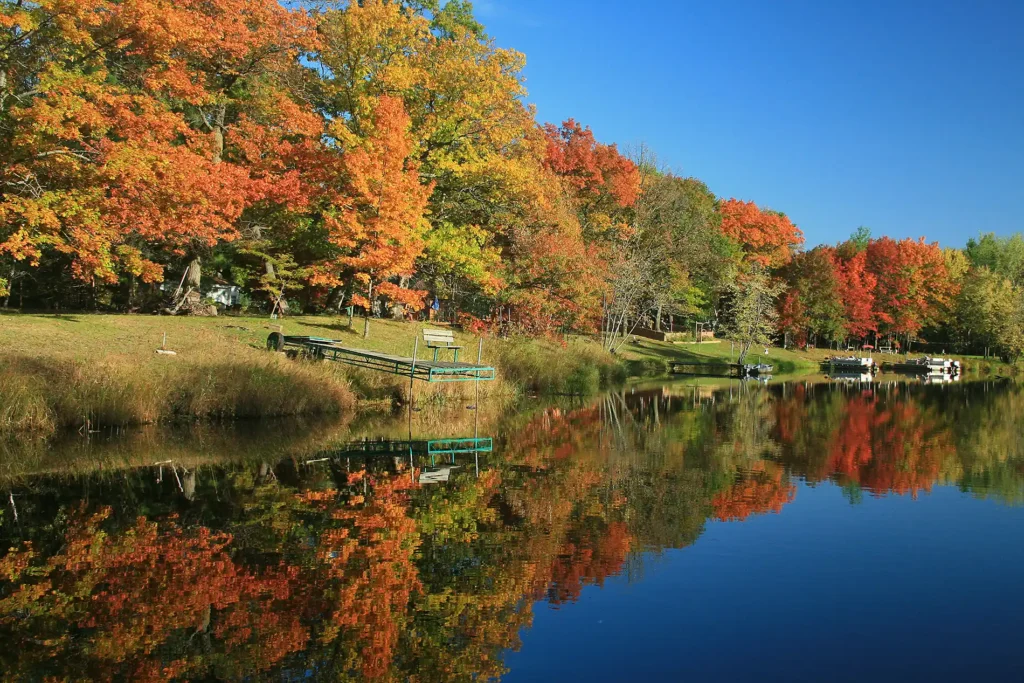
September in the Brainerd Lakes Area is one of the best times of the year. The mornings are cooler, the trees around Brainerd, Nisswa, Crosslake and Pequot Lakes are starting to change color, and homeowners are beginning to deal with fall leaves in Minnesota while there are still plenty of comfortable afternoons left to enjoy the yard.
Then the leaves start falling.
A few leaves scattered across the lawn are no big deal. Give it a couple of windy days, though, and suddenly you’re looking at a carpet of maple, oak and birch leaves wondering whether you should rake them, blow them away or simply run over everything with the mower.
The good news is that you don’t necessarily need to remove every leaf from your lawn. In many cases, the best answer is a combination of mulching and removal.
Can You Leave Fall Leaves on Your Lawn?
You can leave some leaves on your lawn, but you don’t want to let a thick layer remain there for weeks or become buried beneath the snow.
A heavy layer of leaves can block sunlight, trap moisture and create a dense mat over the turf. That can weaken the grass going into winter and leave you with thin or damaged areas when the snow finally disappears in spring.
The key is the amount of leaf coverage. A light scattering of leaves can usually be mulched right into the lawn. If the grass is disappearing underneath them, it’s time to remove at least some of them.
Should You Mulch Leaves With Your Lawn Mower?
For light to moderate leaf coverage, mulching is often the easiest option.
Run your mower over dry leaves and chop them into small pieces. When they’re finely shredded, those pieces settle down between the grass blades instead of forming a layer on top of the lawn. The material eventually breaks down and returns organic matter to the soil.
You may need to make more than one pass if there are quite a few leaves. The goal is to chop them finely enough that you can still clearly see the grass beneath them.
If the lawn looks buried after mowing, there are simply too many leaves to mulch at once.
When Should You Rake Leaves?
Raking still works perfectly well, especially around landscaping, along fences and in smaller yards where a leaf blower may be more trouble than it’s worth.
One common misconception, however, is that raking leaves also aerates the lawn. A stiff rake may scratch the soil surface or pull out a little loose thatch, but it does not provide the same benefit as core aeration.
True lawn aeration removes small plugs of soil, creating openings that allow air, water and nutrients to move deeper into the root zone. Raking leaves is useful cleanup. It isn’t a substitute for aeration.
Is a Leaf Blower Better Than a Rake?
From the lawn’s perspective, it generally doesn’t matter whether you use a rake or a leaf blower. The important thing is preventing excessive leaf buildup.
A blower can make quick work of large properties, especially in the Brainerd Lakes Area where many homes have mature trees and considerably more lawn than a typical city lot. It is also handy for moving leaves out of landscaping, around patios and away from buildings.
Raking is quieter and gives you more control in smaller areas. For many homeowners, the easiest solution is using a blower to gather the majority of the leaves into piles and then using a rake for the final cleanup.
Don’t Blow Leaves Into the Street or Toward the Lake
This is especially important for homeowners around Minnesota’s lakes.
Leaves contain nutrients such as phosphorus. When leaves are blown into streets, drainage areas, ditches or directly toward lakes, those nutrients can eventually make their way into the water.
If you live near Gull Lake, Pelican Lake, Cross Lake, Whitefish Lake or any of the hundreds of smaller lakes throughout central Minnesota, keep leaves on your property until you’re ready to mulch, compost or properly dispose of them.
A clean shoreline doesn’t just look better. Keeping grass clippings and leaves out of the water is one small way property owners can help protect the lakes we all enjoy.
What Can You Do With All Those Leaves?
If you have too many leaves to mulch into the lawn, they don’t necessarily have to become waste.
- Compost them. Leaves are an excellent source of carbon for a home compost pile.
- Mulch garden beds. Shredded leaves can help protect soil and landscaping during winter.
- Use them around trees and shrubs. A moderate layer of shredded leaves can help insulate the soil.
- Use local yard-waste collection. If your city, township or waste provider accepts leaves, this is an easy option when you have more than you can use.
If you’re using leaves as mulch, shredding them first usually works better than piling whole leaves several inches deep. Whole wet leaves can mat together and create a dense layer that doesn’t allow much air or water through.
What About the Final Leaves of the Season?
The last cleanup before winter matters the most.
Early in fall, a few leaves sitting on the lawn for several days aren’t going to cause much trouble. Once temperatures drop and snowfall becomes possible, however, you don’t want a thick layer of leaves trapped underneath the snow all winter.
Give the lawn one final mowing and leaf cleanup before winter arrives. Mulch what you reasonably can and remove the excess so the turf isn’t buried.
That gives your grass a cleaner, healthier transition into dormancy and can help reduce unpleasant surprises when the snow melts next spring.
A Simple Fall Leaf Strategy for Minnesota Lawns
You don’t have to spend every October weekend chasing individual leaves around your yard. Use the mower when leaf coverage is light, remove excess leaves when they begin covering the grass, and make sure the lawn isn’t buried before winter.
If you’re already thinking about how your lawn will look next spring, fall is also one of the most important times to address compaction, thin grass and other problems. TurfCare can help homeowners throughout the Brainerd Lakes Area prepare their lawns for winter and get them ready for another Minnesota growing season.
Contact TurfCare to learn more about professional lawn care services in Brainerd, Baxter, Nisswa, Crosslake, Pequot Lakes and surrounding communities.