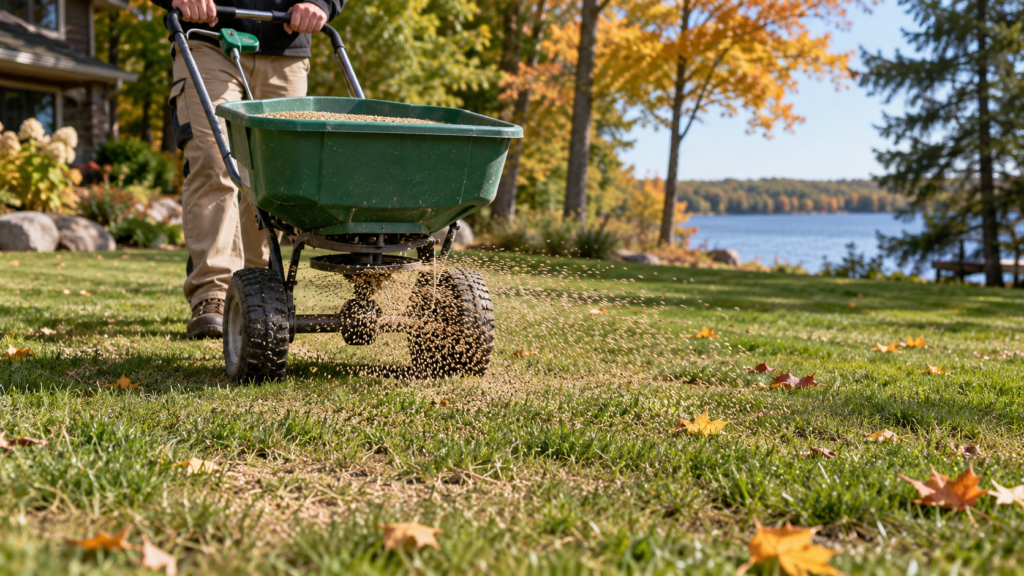
September can tell you a lot about your Minnesota lawn. The heat of summer is fading, the first leaves are beginning to change, and thin or damaged areas that weren’t as noticeable in spring may suddenly stand out. If your lawn looks a little tired after summer, you may be wondering whether you should overseed it this fall.
The short answer is not necessarily every year. A healthy, thick lawn may not need additional seed at all. But if your lawn has become thin, developed bare spots or struggled through summer, fall can be an excellent time to help it recover.
What Does Overseeding Actually Do?
Overseeding simply means spreading new grass seed over an existing lawn. Instead of tearing out the lawn and starting over, new grass is introduced into areas where the existing turf has become thin or weak.
Done properly, overseeding can help thicken a lawn, repair worn or damaged areas and reduce the open space where weeds can become established. It can also be an opportunity to introduce grass varieties better suited to the conditions in different parts of your property.
Does Your Lawn Need to Be Overseeded Every Year?
No. Overseeding shouldn’t automatically be another item on your annual fall checklist.
If your lawn is already thick, healthy and evenly covered, adding more seed may provide very little benefit. Instead, look at the condition of the grass and let the lawn tell you whether overseeding makes sense.
Consider overseeding if you’re seeing:
- Thin or sparse areas of grass
- Bare spots that developed during summer
- Damage from drought or heat
- Heavy wear from kids, pets or regular foot traffic
- Areas that have gradually become thinner over several seasons
- Weak turf where weeds are beginning to take over
- Damage from disease, insects or other lawn problems
If you’re not seeing these problems, your lawn may benefit more from proper mowing, watering, fertilization and other routine care than from simply adding more seed.
September Is Your Lawn’s Summer Report Card
One reason we like evaluating lawns in September is that summer has already exposed their weak spots. Areas that looked great during spring’s cooler temperatures and abundant moisture may have struggled once the weather became hotter and drier.
Before falling leaves begin covering the lawn, walk around your property and take a good look at the turf. Pay attention to areas near driveways and sidewalks, heavily traveled paths, sunny slopes, shaded areas beneath trees and anywhere the lawn appears noticeably thinner than the surrounding grass.
Those problem areas can help determine whether overseeding is worthwhile and may also reveal other issues that need attention.
Why Fall Is a Good Time to Overseed in Minnesota
Most Minnesota lawns contain cool-season grasses. These grasses grow actively during the cooler conditions of spring and fall and slow considerably during the heat of summer.
That makes late summer and early fall an excellent period for establishing new grass. The soil is still warm enough to encourage germination while cooler air temperatures reduce some of the stress young grass experiences during summer.
There is another advantage: new grass established in fall has an opportunity to begin developing before winter and can continue filling in when growing conditions return the following spring.
Don’t Wait Too Long
There is an important catch to fall overseeding in Minnesota: earlier is generally better.
By the second half of September, the ideal window is beginning to close, particularly in northern Minnesota. Seed needs enough favorable weather to germinate and establish before winter. Grass that germinates very late may not be mature enough to survive Minnesota’s winter conditions.
If you’re considering overseeding now, don’t put it on the October project list and forget about it. Timing matters.
Aeration and Overseeding Work Well Together
One of the keys to successful overseeding is getting the seed into good contact with the soil. Simply throwing grass seed over a thick layer of existing turf and thatch isn’t always enough.
Core aeration can help by removing small plugs of soil and creating openings throughout the lawn. In addition to reducing soil compaction, those openings can improve the opportunity for seed to reach the soil rather than becoming trapped on top of the existing grass.
That’s why aeration and overseeding are often performed together, especially on lawns that have become compacted or thin from regular use.
What If You’ve Missed the Fall Overseeding Window?
If temperatures have dropped and it’s too late for new grass to become established, don’t assume you need to rush seed onto the lawn anyway.
Minnesota homeowners have another option called dormant seeding. With dormant seeding, grass seed is applied late enough in the season that temperatures are too cold for it to germinate. The seed remains dormant through winter and begins germinating when conditions become favorable in spring.
The timing is important. Dormant seeding is generally done much later in fall, after soil temperatures have dropped enough to prevent germination. Seeding during the awkward period between normal fall seeding and true dormant seeding can result in seedlings emerging too late to survive winter.
What Kind of Grass Seed Should You Use?
Not every part of a Minnesota lawn has the same needs. Sun exposure, shade, soil conditions, moisture and the amount of traffic the lawn receives can all affect which grasses perform best.
Kentucky bluegrass is common in Minnesota lawns, while different fescues and perennial ryegrass can provide advantages under particular conditions. Many lawns benefit from a carefully selected mixture rather than relying on a single grass species.
We’ll take a closer look at Kentucky bluegrass, fescue and perennial ryegrass in an upcoming article and explain where each one works best in a Minnesota landscape.
Give Your Lawn What It Needs This Fall
Overseeding every fall isn’t necessary for every Minnesota lawn. The better approach is to evaluate the condition of your grass after summer and respond to what you see.
If the lawn is thick and healthy, keep taking care of it. If you’re seeing thin areas, bare spots or damage from summer stress, fall overseeding may help restore density and give the lawn a stronger start next spring.
TurfCare can evaluate your lawn, identify areas that need attention and determine whether aeration, overseeding or another fall lawn-care service makes sense for your property.
Contact TurfCare today to schedule your fall lawn service in the Brainerd Lakes Area.