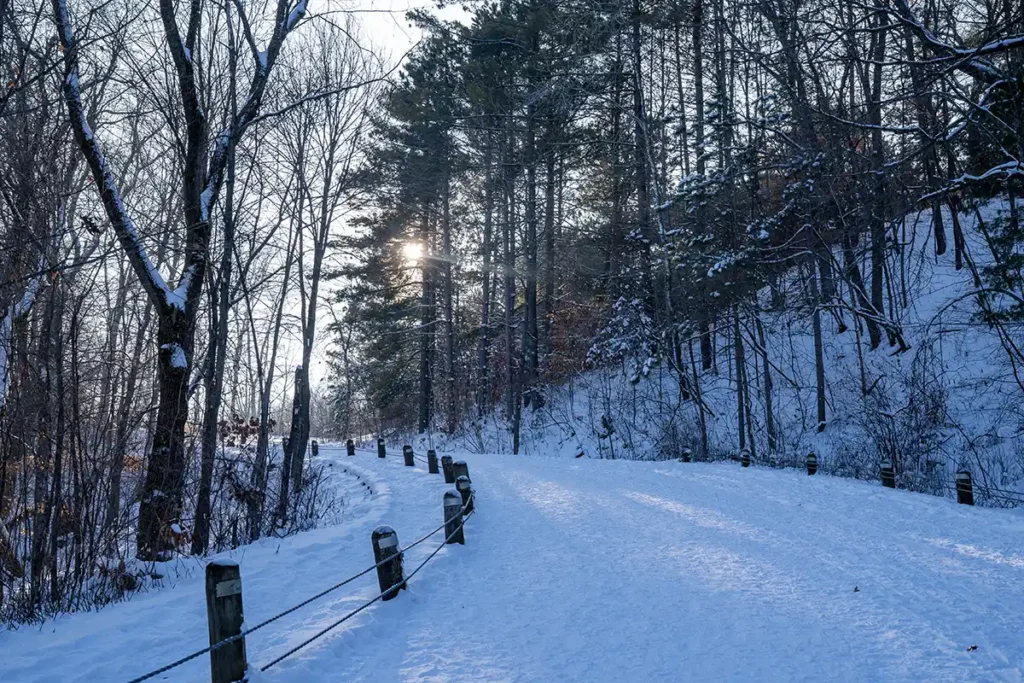
By January in the Brainerd Lakes Area, your lawn may seem like a distant memory.
Whether you’re in Brainerd, Baxter, Nisswa, Pequot Lakes, Crosslake, or somewhere else in north-central Minnesota, there’s a good chance your grass will spend months buried beneath snow.
So what exactly is happening down there?
Your lawn isn’t dead, and it isn’t exactly doing nothing. Minnesota’s cool-season grasses have adapted to survive long, cold winters by entering dormancy and relying on energy stored during the previous growing season.
Here’s what is going on underneath that blanket of snow.
Your Grass Goes Dormant
As temperatures drop in the fall, your lawn begins preparing itself for winter.
The visible grass blades stop actively growing, but the plant has been storing nutrients and carbohydrates in its roots and crown. Those reserves help keep the plant alive through winter and provide energy when growth resumes in spring.
That’s one reason good fall lawn care matters. A healthy lawn entering dormancy is generally better prepared for the months ahead.
Snow Can Actually Protect Your Lawn
A thick layer of snow may not look particularly friendly, but snow can provide valuable insulation.
Snow helps protect the soil and plant roots from extreme temperature swings. The air trapped within snow creates an insulating layer that can keep soil temperatures more stable even when temperatures above the snow become brutally cold.
In fact, a Minnesota winter with very little snow can sometimes be harder on turf than one with consistent snow cover. Without that insulation, grass can be exposed to colder soil temperatures and winter drying.
So while you may not enjoy shoveling it, your lawn can benefit from that snowy blanket.
The Trouble Starts When Moisture Gets Trapped
Snow isn’t always harmless.
Long-lasting snow cover over unfrozen or wet ground can create conditions favorable for diseases commonly known as snow mold.
When the snow disappears in spring, snow mold can show up as circular patches of flattened, discolored, or matted grass. Gray and pink snow mold are both found in northern lawns.
The good news is that snow mold often looks worse than it actually is. In many cases, affected grass recovers once the lawn dries and growing conditions improve.
Preparing the lawn properly in fall, including removing excessive leaves and avoiding overly long grass going into winter, can help reduce the conditions that encourage snow mold.
Ice Can Be Harder on Grass Than Snow
Snow provides insulation. A thick layer of ice is a different story.
Water that collects in low areas can freeze over the turf, particularly during winters with repeated thawing and refreezing. Extended ice cover can stress or damage grass beneath it.
This is one reason drainage problems that seem minor during summer can become more noticeable after winter.
When spring arrives, areas where water tends to collect may be slower to recover or may show patches of winter injury.
There May Be Something Moving Under There
Your lawn may look peaceful from the kitchen window, but underneath the snow there can be traffic.
Voles can create trails through turf beneath the snow where they’re protected from predators. When the snow melts, homeowners sometimes discover winding pathways of flattened or damaged grass that weren’t there in the fall.
Fortunately, vole trails often look more dramatic than the actual damage. The grass is frequently able to recover as spring growth begins.
Keeping grass from becoming excessively long before winter can also make the lawn less inviting to these little subterranean commuters.
Road Salt Can Cause Problems Too
Lawns along driveways, sidewalks, and roads face another winter hazard: deicing salt.
Snowplows, snowblowers, shoveling, and melting snow can move salt onto nearby turf. Over the course of a long Brainerd Lakes winter, those salts can accumulate.
The damage usually doesn’t become obvious until spring, when grass along pavement may appear brown or fail to green up as quickly as the rest of the lawn.
Using only as much deicer as necessary and avoiding piling heavily salted snow onto lawn areas can help reduce the risk.
Then Spring Finally Arrives
Eventually the snow begins disappearing from lawns around Brainerd, Baxter, Nisswa, Crosslake, and the rest of the Lakes Area.
Your grass doesn’t immediately wake up just because you can see it again.
Soil temperature matters more than a couple of warm afternoons. Cool-season lawns begin becoming active as soil temperatures rise, and the grass gradually starts using the energy it stored the previous fall to produce new growth.
This is also why you shouldn’t panic if your lawn looks terrible immediately after the snow melts.
Matted grass, brown patches, vole trails, and other winter scars can make an otherwise healthy lawn look pretty rough in March or April. Give it some time to dry out and begin actively growing before deciding something is permanently damaged.
A Healthy Spring Lawn Starts Before the Snow Falls
Once winter arrives, there isn’t much you need to do to your lawn. In many ways, the best winter lawn care happens before winter gets here.
Proper mowing, removing excessive leaves, addressing drainage problems, and giving your lawn the nutrients it needs during the growing season can all help prepare it for what happens under the snow.
At TurfCare, we’ve been helping lawns throughout the Brainerd Lakes Area handle everything northern Minnesota throws at them for more than three decades.
The lawn may disappear for a few months every winter.
But underneath all that snow, it’s getting ready to do the same thing Minnesotans do every year: wait patiently for spring.